|
|
| General Information | |
| About SCC | |
| Testimonials | |
| Race Staff | |
| Solar Racing History | |
| Resources | |
| Workshops | |
| Sponsors | |
| Giving to the SCC | |
| Internships | |
| 2026 Interns | |
| Media Page | |
| Join LinkedIn Alumni Group | |
| Event Information | |
| 2026 Race Information | |
| Event Updates | |
| Event Results | |
| Event Calendar | |
| Team Profiles | |
| Photos & Videos | |
| Weather Information | |
| Maps & Directions | |
| Team Support | |
| Webcasts | |
| Navigating Scrutineering | |
| Buy/Sell Parts | |
| White Papers | |
| Technical Documents | |
| Rules & Rules Updates | |
| Intent to Race Form | |
| Team Documents | |
 |
|

|
|
|
Sponsored by: | |
|
Solar Car Challenge Update
May 15, 2026
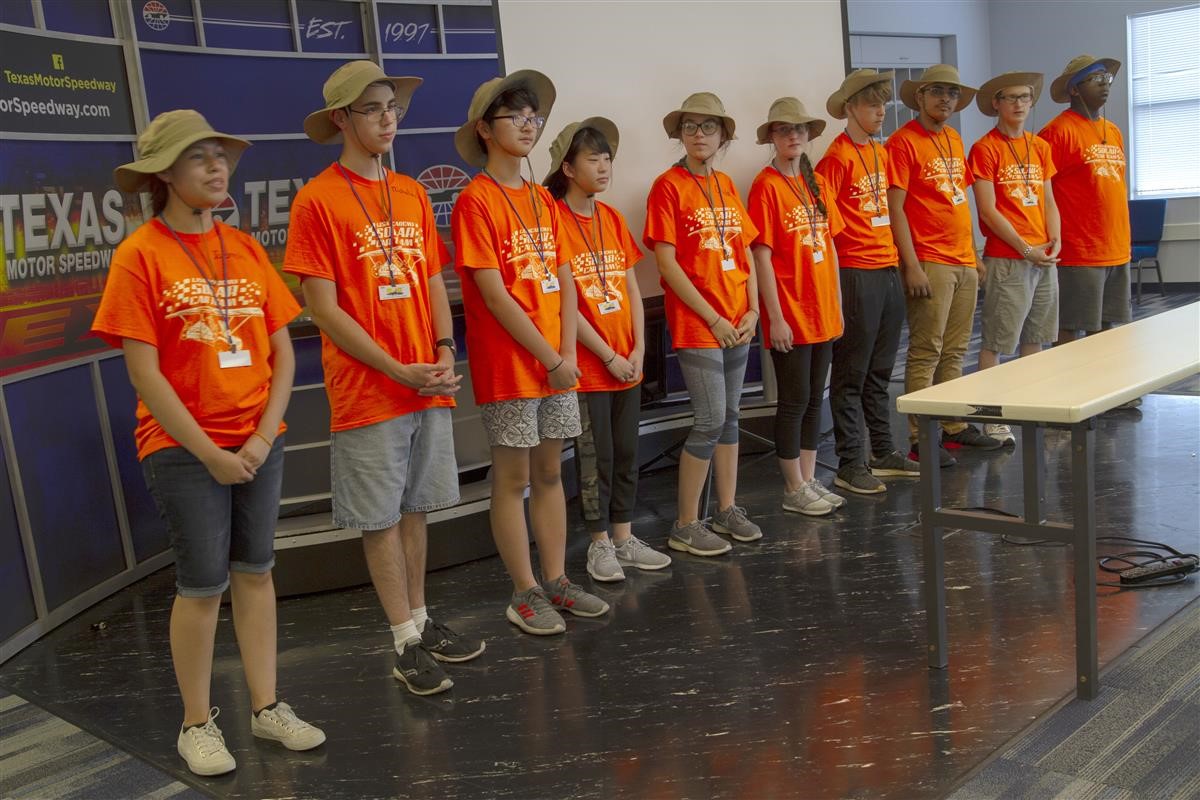
Twenty-Four High School Solar Car Teams are getting ready for the 2026 Solar Car Challenge, a “Cross-Texas Driving Adventure.” Thousands of people will be coming out to meet these great students and to see their solar cars. What a celebration of Science, Engineering, and Alternative Energy!
HOW DO TEAMS SUPPORT THEIR PROJECT? The Solar Car Challenge is foremost an education Program. To that end, the project is academically supported in four ways:
 WHAT ARE TEAMS WORKING ON RIGHT NOW? (1) Teams are completing vehicle construction, and should be launching into solar car testing. Special emphasis should be place on driving different types of terrain. The "Cross-Texas Driving Adventure" will take students from the piney forests of East Texas through the famous Hill Country of Central Texas, and on to the great plains of West Texas. (2) Teams may not be able to drive the full number of miles allocated each day. They are entitled to choose which miles they want to drive, and which miles they plan to trailer the solar car. This requires the development of a Team Strategy based on three things:
(3) The exact race course was provided in January, 2026. Teams are now exploring every mile on that course using topographic software. They want to determine which hills they want to drive, and which hills they want to trailer. The team that tries to drive every hill may end up driving fewer miles each day because of the drain on their energy collection and storage systems. This is where pre-race testing creates a huge advantage. (4) Teams are also incorporating telemetry systems into their solar car. Telemetry is designed to provide a vast flow of data to a Strategy Team following the solar car in a Chase Vehicle. This data provides input on solar energy collection, array functioning, energy storage, battery safety, and driver conditions. This data provides the Strategy Team enough information to advise the driver as to the most efficient use of energy stored in the batteries, and to suggest an optimum driving speed. (5) Teams should also be practicing their team work employed when they have to repair the solar car off the side of the road, or when they choose to trailer their solar car. This implies practicing loading and unloading the solar car from the trailer. It also focuses on the implementation of strict Safety Procedures required when teams pull off the road. A strong Team Safety Officer is vital to the success of off-road activities. (6) Teams are also concentrating on Race Logistics. This includes securing sufficient back-up parts to make off road repairs during the course of the race. Teams will also be double checking that they have all the tools necessary to make those repairs. 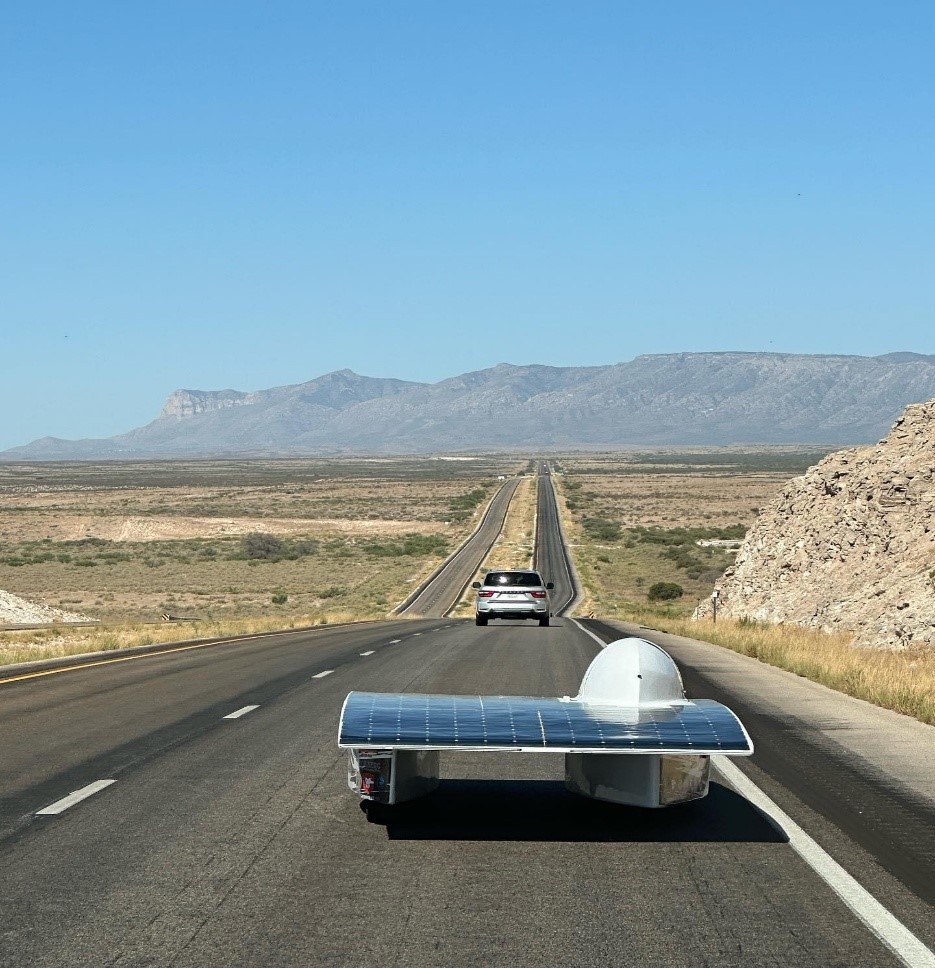
|
|||